

close
Choose Your Site
Global
Social Media


Views: 0 Author: Site Editor Publish Time: 2026-06-03 Origin: Site


Routine cleaning in chemical manufacturing involves handling toxic, flammable, or highly corrosive residues daily. Reactors, storage tanks, and heat exchangers demand rigorous, consistent sanitation to maintain production purity. You face immense operational stakes when managing these aggressive industrial environments.
Standard commercial pressure washers routinely fail under these intense chemical industry duty cycles. They cannot withstand extreme operational environments or aggressive fluid properties. This predictable equipment failure leads to severe pump cavitation, rapid seal degradation, and unacceptable safety hazards on the plant floor.
Engineering and procurement teams need an evidence-based framework to make reliable equipment decisions. We provide this comprehensive guide to help you evaluate and shortlist the correct equipment efficiently. You will learn exactly how to select and integrate a continuous-duty heavy system safely into your plant infrastructure.
The choice between plunger and piston architectures dictates continuous-duty reliability; plunger pumps generally dominate high-pressure chemical applications.
Material compatibility is non-negotiable; standard brass manifolds degrade rapidly, making specialty alloys or stainless steel mandatory.
Selecting the right pump requires balancing Pressure (PSI/Bar) for cutting power with Flow (GPM/LPM) for debris removal.
Selecting reliable equipment requires a deep understanding of your specific daily operations. You must assess your exact cleaning requirements before reviewing pump specifications. Rushing the evaluation process often leads to premature equipment failure.
Follow these diagnostic steps to define your operational baseline:
Identify the Contaminant: Differentiate clearly between crystalline scale, polymerized resins, and viscous sludge. Hard crystalline scale requires extreme pressure for effective cutting power. Conversely, viscous sludge demands high fluid flow to flush heavy debris effectively away from the surface.
Review the Cleaning Environment: Assess your facility layout thoroughly. Portable skid-mounted units offer flexibility across multiple plant zones. Centralized Clean-In-Place (CIP) infrastructures provide consistent, automated sanitation for fixed reactors. Your chosen environment dictates the necessary pump footprint and drive type.
Evaluate Duty Cycles: Determine your exact usage frequency. A pump running continuously for eight hours requires substantial crankcase oil capacity. It also needs enhanced heat dissipation capabilities. Standard commercial units overheat quickly under continuous industrial duty cycles.
Assess Fluid Temperatures: High-temperature washdown fluids dramatically accelerate cleaning efficiency. However, fluids exceeding 140°F (60°C) destroy standard pump components. You must specify specialized high-temperature seals to prevent premature embrittlement and catastrophic leaks.
Operators frequently underestimate the abrasive nature of suspended solids during tank washdowns. Documenting these specific operational realities prevents costly procurement mistakes.
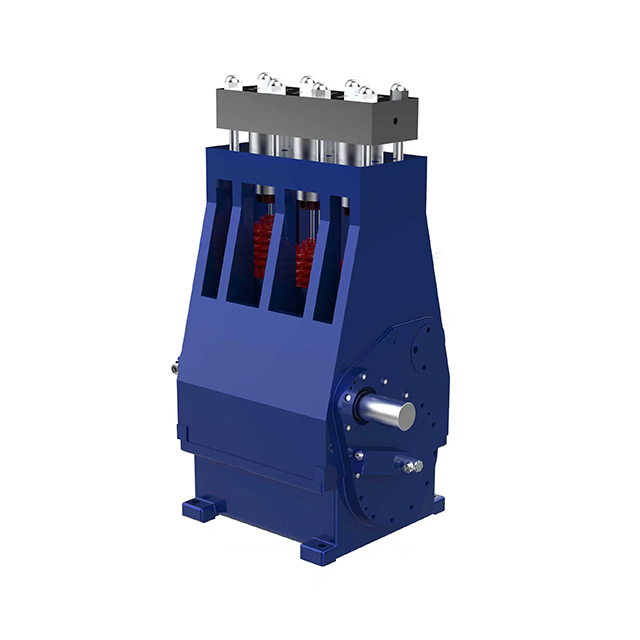
Pump architecture directly determines mechanical longevity in harsh environments. The fundamental design difference between plunger and piston configurations affects seal wear rates significantly. Understanding these mechanics ensures you choose the right tool for heavy-duty applications.
Triplex plunger designs dominate the chemical cleaning industry. The plungers slide back and forth past stationary high-pressure seals. This stationary seal design reduces friction significantly. You gain superior pressure capabilities, easily reaching 10,000 PSI or higher. Plunger pumps offer extended seal life and simplified maintenance procedures. Industry experts heavily recommend this architecture for continuous-duty chemical plant sanitation.
Piston pumps utilize seals attached directly to a moving piston. The seals travel continuously against the cylinder wall. This movement creates higher friction. Piston designs excel at lower pressures while delivering higher fluid volumes. However, abrasive suspended solids wear these moving seals down very rapidly. They remain unsuitable for aggressive chemical scaling applications.
The connection method between the motor and the pump head affects vibration and footprint. Direct drive systems couple the pump directly to the motor shaft. This creates a compact footprint ideal for tight spaces. However, direct drives transfer motor vibration directly into the pump bearings.
Belt drives absorb operational vibration effectively. They utilize pulleys to lower the pump RPM relative to the motor speed. Running the pump at lower speeds extends bearing and seal life significantly. Belt-driven configurations thrive in harsh chemical environments despite requiring a larger physical footprint.
Comparison of Core Pump Architectures | ||
Feature | Triplex Plunger Pumps | Piston Pumps |
|---|---|---|
Sealing Mechanism | Stationary seals, moving plungers | Moving seals attached to pistons |
Pressure Capability | Very High (up to 10,000+ PSI) | Moderate to Low |
Flow Rate | Moderate | Very High |
Abrasion Resistance | Excellent | Poor |
Best Application | Heavy-duty chemical scaling | High-volume flushing |
Material compatibility represents the most critical factor in chemical industry procurement. Selecting incorrect metallurgy guarantees rapid equipment degradation. You must analyze your washdown chemicals before finalizing fluid end materials.
Standard commercial pumps utilize brass manifolds to save manufacturing costs. Brass possesses high vulnerability to chemical corrosion. Aggressive washdown detergents initiate a process called dezincification. The chemicals strip zinc from the brass alloy, leaving a porous, fragile copper shell. This degradation leads to sudden manifold cracking and hazardous fluid leaks.
Upgrading to a Stainless Steel High-Pressure Cleaning Pump prevents this rapid degradation. Industry standards typically dictate 316L stainless steel for wetted components. The "L" denotes low carbon content, which improves welding characteristics and corrosion resistance. A stainless steel manifold withstands aggressive caustics and provides exceptional operational longevity.
Some environments exceed the protective capabilities of standard 316L stainless steel. Highly acidic applications demand specialized metallurgy. Chloride-rich environments cause severe pitting and stress corrosion cracking in standard steel. In these extreme scenarios, engineers specify duplex stainless steel or Hastelloy. These advanced alloys offer superior resistance against localized chemical attacks.
Manifold metallurgy only solves half the problem. The internal seals must also survive chemical exposure. Standard Buna-N seals swell, crack, or dissolve when exposed to industrial solvents. You must specify elastomers based on precise chemical compatibility charts.
Elastomer Chemical Compatibility Summary Chart | |||
Elastomer Material | Common Industry Name | Excellent Resistance To | Poor Resistance To |
|---|---|---|---|
NBR | Buna-N | Water, mild oils, standard detergents | Strong solvents, acids, ozone |
FKM | Viton | Petroleum oils, mineral acids, high heat | Ketones, steam, hot amines |
EPDM | EPDM | Caustics, hot water, steam, alcohols | Petroleum-based oils, solvents |
PTFE | Teflon | Nearly all harsh industrial chemicals | Abrasive slurries (lacks elasticity) |
Chemical plant environments amplify standard operational risks. A minor equipment malfunction can escalate quickly into a severe safety incident. Proper system integration mitigates these inherent dangers effectively.
Volatile chemical environments contain flammable vapors and combustible dust. Standard electric motors generate microscopic sparks during operation. These sparks present a catastrophic ignition risk. The pump motor and electrical controls must carry appropriate ATEX or Class 1 Div 1 ratings. Explosion-proof enclosures isolate internal sparks from the surrounding volatile atmosphere.
High-pressure pumps remain highly susceptible to cavitation damage. Starved inlet water supplies create low-pressure zones inside the manifold. The fluid boils at ambient temperatures, forming microscopic vapor bubbles. These bubbles collapse violently against the metal surfaces. Experienced operators know cavitation sounds exactly like marbles rattling inside the pump head.
You must maintain proper Net Positive Suction Head (NPSH) to prevent this destruction. Engineers calculate the required inlet pressure carefully. Installing pulsation dampeners stabilizes fluid flow and protects internal components from hydraulic shock.
Every industrial High-Pressure Cleaning Pump needs automated failsafes to protect operators and equipment. You must integrate specific components into the washdown skid:
Unloader Valves: These bypass excess fluid when the operator releases the trigger gun. They prevent sudden over-pressurization.
Thermal Relief Valves: Bypassed water heats up rapidly through friction. Thermal valves dump scalding water before it ruins internal seals.
Low-Water Shutdown Sensors: Running a pump dry destroys seals in minutes. Automated sensors cut motor power immediately upon detecting inlet flow loss.
The drive end contains the crankshaft, connecting rods, and lubricating oil. Airborne chemical vapors easily contaminate unprotected crankcases. Mixing corrosive vapors into the oil destroys internal bearings quickly. Specifying enclosed drive ends protects the mechanical core from ambient chemical dust.
Procuring industrial cleaning equipment requires structured vendor communication. A vague Request for Quotation (RFQ) attracts under-engineered commercial equipment. Building a precise technical document filters out unqualified manufacturers immediately.
Document exact performance ceilings clearly. List the required PSI/Bar, GPM/LPM, and maximum fluid temperatures. Avoid the common mistake of over-specifying pressure. Unnecessary pressure ratings drastically reduce available fluid flow. You need sufficient flow to carry dislodged debris out of the chemical reactor.
Manufacturer claims mean little without empirical data. Ask vendors for typical operating hour intervals between seal replacements. Request valve lifespan statistics under similar chemical industry conditions. This historical reliability data helps you plan preventative maintenance schedules accurately. Prioritize manufacturers offering verifiable operational longevity in harsh environments.
Industrial equipment inevitably requires replacement parts. A custom pump becomes a severe liability if replacement parts sit overseas. You must prioritize OEMs maintaining domestic stock of proprietary seals, plungers, and valves. Fast parts availability prevents extended production downtime.
Never accept unverified equipment. Require comprehensive Factory Acceptance Testing (FAT) documentation. This proves the system meets your exact performance parameters before leaving the manufacturing facility. Custom-engineered skids demand rigorous pre-shipment validation. Reviewing FAT protocols ensures you receive a fully functional, safe system.
Selecting reliable washing equipment for chemical plants represents an exercise in risk mitigation and material science. You cannot simply search for the highest pressure rating. True industrial reliability requires a holistic engineering approach.
Default strictly to triplex plunger architectures for continuous-duty applications.
Insist on stainless steel fluid ends and verify chemical-specific elastomers.
Demand explosion-proof certifications and mandatory system failsafes.
Base your final decision on proven maintenance lifespan data and domestic parts availability.
Consult closely with an application engineer as your immediate next step. Map your precise fluid dynamics, duty cycles, and ATEX requirements thoroughly. Taking these deliberate steps ensures you finalize procurement confidently and maintain rigorous plant safety.
A: Optimal pressure typically ranges from 3,000 to 10,000 PSI. The exact requirement depends heavily on your specific residue. Hard crystalline scale requires high pressure for effective cutting. Conversely, viscous materials require high flow rates combined with hot water for proper flushing. Always match the pressure profile to your predominant contaminant type.
A: Rarely. Standard commercial units lack the corrosion-resistant metallurgy required for industrial environments. They typically feature brass manifolds. These components degrade quickly around aggressive chemicals. Furthermore, commercial units lack high-temperature seals. They also miss the explosion-proof motors mandated by strict chemical manufacturing safety standards.
A: Seal lifespan remains highly variable. It depends primarily on your specific duty cycle and fluid temperature. However, heavy industrial applications typically require preventative seal maintenance every 500 to 1,500 operating hours. Monitoring for minor leaks helps establish a reliable predictive maintenance schedule for your facility.
A: Downstream injectors introduce chemicals after the water leaves the manifold. This protects internal components from harsh chemical degradation. Inlet injection passes cleaning chemicals directly through the pump body. This method strictly requires stainless steel fluid ends and chemically resistant seals like PTFE or Viton to prevent immediate internal damage.


