

close
Choose Your Site
Global
Social Media


Views: 0 Author: Site Editor Publish Time: 2026-06-30 Origin: Site


Elevated cleaning on roofs, multi-story building facades, and tall scaffolding significantly amplifies the physical risks of standard pressure washing equipment. Operators working at height face unique biomechanical and environmental challenges. Standard tools routinely cause excessive operator fatigue, dangerous recoil forces, and drastic efficiency drops. Gravity continuously induces downward pressure loss across vertical hose runs. Ignoring these structural realities puts your crew in direct harm's way.
Our primary purpose is to solve this vital commercial issue. This guide provides a comprehensive framework for evaluating and selecting equipment properly. You will discover exactly how to balance site safety, ergonomic sustainability, and raw cleaning power for demanding commercial applications. By understanding core specifications, operators can safely tackle rigorous elevated tasks without sacrificing daily output.
Prioritize flow rate (GPM) over extreme pressure (PSI) to compensate for gravity and vertical distance without increasing recoil risks.
Select ergonomic, "easy-pull" or relaxed-action triggers to mitigate operator forearm fatigue during prolonged elevated shifts.
Match gun materials (stainless steel vs. brass) to the specific chemical usage and weight tolerance of your crew.
Factor in the compatibility of heavy-duty attachments, such as a rotating high-pressure gun or telescopic wand, when calculating total operational weight.
Working at high elevations requires absolute precision and constant situational awareness. The reality of trigger kickback poses a severe operational danger. High-pressure pumps generate massive reactive forces upon initial trigger engagement. This sudden recoil easily destabilizes workers standing on narrow boom lifts, unstable ladders, or swaying scaffolding. A simple momentary loss of balance can trigger disastrous falls. Operators must brace their bodies perfectly before every single spray cycle.
We must also examine the relentless physics of hose drag. Water carries substantial physical mass. One gallon of water weighs approximately 8.34 pounds. A 100-foot vertical hose filled completely full pulls downward with intense gravitational force. This gravity drag severely limits the maneuverability of the tool itself. Users must actively fight gravity just to aim the nozzle accurately. Over a long shift, this dead weight severely degrades shoulder and wrist stamina.
Compliance and site safety standards dictate specific required operational features. Commercial sites mandate strict adherence to mechanical safety protocols. You must seek out specific protective features to maintain job site compliance.
Safety Lock-Offs: These mechanisms physically prevent accidental discharges when operators climb ladders or adjust safety harnesses.
Weep Functions: These maintain a tiny continuous trickle of water, protecting internal valves against freezing temperatures during winter elevation work.
Dump Designs: These systems release internal line pressure instantly upon trigger release, protecting crews during unexpected equipment jams or sudden pump failures.
Industry professionals constantly debate the merits of volume versus pressure. Gallons Per Minute (GPM) usually matters far more for elevated washing operations. Water needs substantial physical mass to travel vertically and perform work. High volume carries dirt, algae, and heavy debris away efficiently. Extremely high pressure (PSI) simply atomizes water into useless mist over long vertical distances. Wind easily blows this light mist away before it ever hits the target facade. High GPM ensures heavy water droplets strike the surface carrying effective kinetic energy.
You must accurately calculate natural pressure loss. Pumping water straight up forces your machine to fight gravity relentlessly. You lose approximately 0.43 PSI per vertical foot of elevation. Furthermore, hose friction strips away even more pressure. The inside walls of long hoses create physical drag against the rapidly moving water flow. Consider this simplified calculation matrix when planning your next job.
Vertical Elevation | Gravity Pressure Loss | Estimated Friction Loss (100ft Hose) | Total Estimated Drop |
|---|---|---|---|
25 Feet | ~11 PSI | ~150 PSI | ~161 PSI |
50 Feet | ~22 PSI | ~150 PSI | ~172 PSI |
75 Feet | ~32 PSI | ~150 PSI | ~182 PSI |
100 Feet | ~43 PSI | ~150 PSI | ~193 PSI |
Always match your hand-held equipment correctly to the base pump. Your selected High-Pressure Spray Gun must comfortably exceed your machine’s maximum output rating. Rate it at least 10 to 20 percent higher than the peak system pressure. This crucial buffer directly prevents internal blowout failures. It thoroughly protects aerial operators from dangerous high-pressure bursts near their unprotected hands or faces.
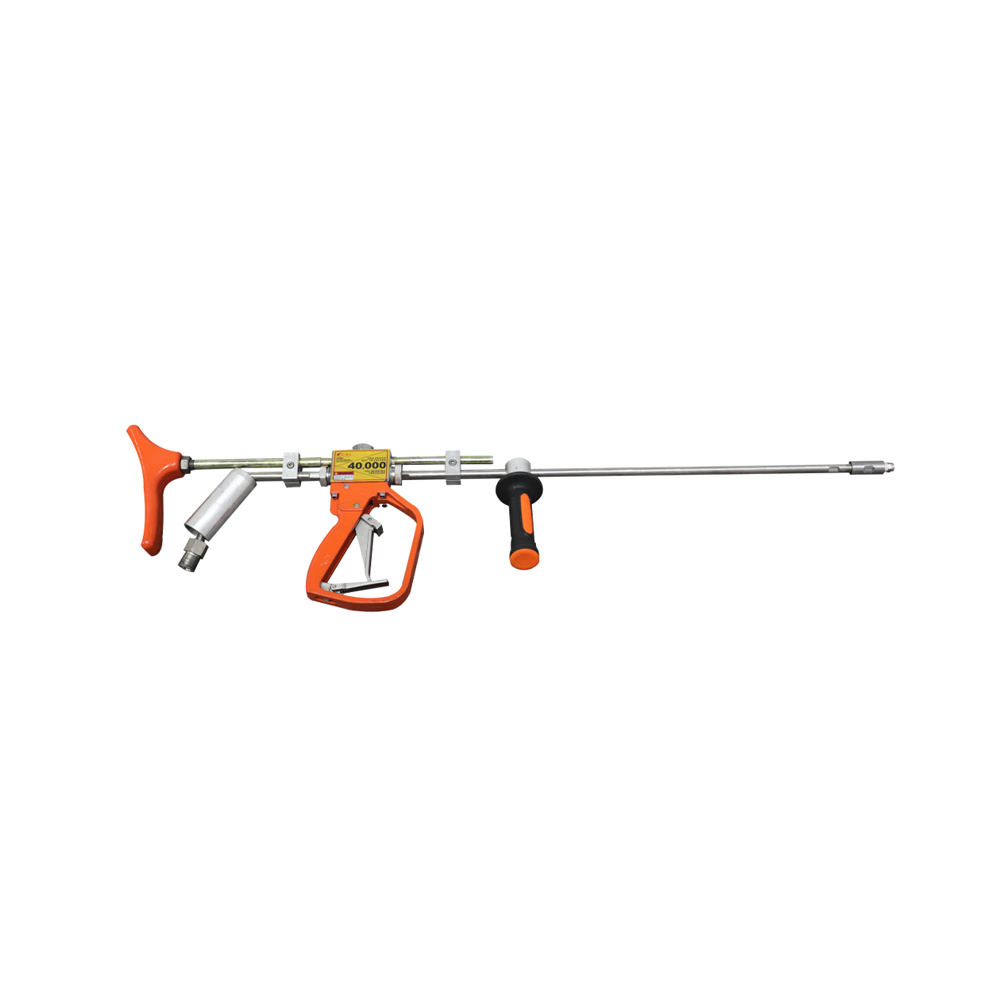
Traditional triggers demand constant, heavy manual grip force. This sustained tension quickly exhausts forearm muscles during multi-hour aerial shifts. Operators instinctively loosen their grip as deep fatigue sets in. This leads to sloppy spray patterns and highly compromised safety. Relaxed-action or "easy-pull" mechanisms provide a brilliant engineering solution. They utilize advanced internal pivot designs. These superior systems require up to 60 percent less physical force to hold open once engaged.
We see a massive return on investment regarding human performance. Reduced operator fatigue directly translates to fewer required rest breaks. Crews experience far fewer repetitive strain injuries over the long term. Safer overall handling naturally follows when hands remain fresh, strong, and highly responsive.
Let us evaluate common hose connection points. Rear-entry trigger designs typically work best for downward spraying tasks. They physically balance the heavy water-filled hose directly behind the operator's dominant hand. This alignment reduces wrist torque significantly. Conversely, front-entry connections suit incredibly tight working spaces beautifully. They allow for a much shorter overall tool profile. Scaffold workers often prefer front-entry models for close-quarters cleaning where mobility remains restricted.
You must also closely consider weep versus non-weep internal designs for high-altitude work. Weeping triggers deliberately maintain a continuous, low-volume flow of water. This constant microscopic drip actively prevents internal freezing during harsh winter operations. It acts as a vital structural safeguard against cracked internal valves. Expanding internal ice destroys solid brass fittings instantly. Non-weep models stop water flow entirely. They suit warm environments where absolute water conservation matters most.
Elevated work often requires impressive extended reach capabilities. Telescopic wands extend your cleaning power across broad, hard-to-reach commercial facades. You must carefully evaluate wand threading and connection points. Quick-connect reliability matters immensely when you support heavy, fully extended wands. Weak connections bend or fail under heavy mechanical leverage. Secure locking collars confidently prevent catastrophic equipment drops from high elevations.
Consider specific heavily soiled commercial scenarios. Elevated concrete structures, parking decks, or industrial silos frequently require intense scrubbing power. Integrating an otating High-Pressure Gun nozzle significantly cuts overall cleaning time. It automatically delivers an aggressive circular impact force. Operators achieve much deeper cleaning without increasing base PSI at the pump. This keeps horizontal recoil forces safely manageable on narrow boom lifts. The spinning mechanical action shears dirt away much faster than standard fan nozzles.
Acknowledge the obvious physical weight penalties of these external accessories. Adding brass swivels, heavy-duty lances, and rotating attachments drastically increases the total moment of inertia. Heavier tools naturally require much stronger wrist support.
Use lightweight aluminum extension wands whenever possible to reduce lifting fatigue.
Attach a padded shoulder strap to distribute heavy lance weight across your torso evenly.
Test the fully assembled rig on the solid ground before ever boarding an aerial lift.
Inspect quick-connect O-rings daily for any signs of dangerous wear or tearing.
Component material directly impacts equipment longevity and daily physical handling. You must weigh the structural benefits of different industrial metals carefully. Stainless steel carries a naturally higher upfront cost. However, it handles highly caustic cleaning chemicals beautifully. It remains highly durable against accidental impacts against scaffolding. The main drawback is its significantly heavier physical weight. Brass represents the traditional commercial industry standard. It proves highly cost-effective and slightly lighter for prolonged use. Unfortunately, soft brass remains prone to faster internal wear when you inject harsh chemical detergents. Acidic cleaners degrade internal brass walls rapidly over time.
Material Type | Chemical Resistance | Weight Profile | Best Application |
|---|---|---|---|
Stainless Steel | Excellent against caustics/acids | Heavy | Industrial silos, harsh chemical injection |
Standard Brass | Moderate; degrades under high acid | Medium/Light | General commercial facades, pure water cleaning |
Internal valve durability heavily dictates your practical maintenance schedules. We constantly evaluate ceramic balls versus stainless steel internal mechanisms. Ceramic internal components resist friction wear much longer under high volume. They withstand aggressive chemical degradation exceptionally well. This extreme structural durability proves crucial for limiting expensive downtime on complex elevated job sites. Replacing internal parts 100 feet in the air is nearly impossible.
Finally, assess your routine maintenance realities honestly. Look closely at the commercial availability of specialized rebuild kits. Replacing simple internal O-rings and seats saves significant money. You should always keep spare rebuild kits inside the primary work truck. Compare this simple modular repair against the heavy burden of full equipment replacement. Smart material choices keep your business running smoothly without unexpected delays.
Base your final equipment selection on a practical, job-specific usage matrix balancing max elevation and chemical profiles.
Remember the fatigue factor. The most powerful equipment remains completely useless if it creates unsafe muscle fatigue within the first hour of elevated work.
Consult your local commercial supplier directly to physically test trigger actuation force in person.
Always confirm exact thread compatibility alongside your existing hoses and pumps before finalizing any purchase.
A: Yes. Friction loss and vertical lift both reduce pressure significantly. Water pushing against internal hose walls creates drag resistance. Your equipment must be rated for the machine's maximum base output. However, expect functional pressure at the nozzle to be noticeably lower at high elevations.
A: Yes, you can use one safely under strict conditions. The operator must actively anticipate the initial torque and kickback upon pulling the trigger. Furthermore, verify the lift platform is officially rated for the combined operator weight and lateral recoil force.
A: A live swivel prevents hose kinking and tangling as the operator continuously maneuvers. This mechanism spins freely under heavy pressure. It is exceptionally critical in elevated work. Un-kinking a heavy, pressurized hose on scaffolding poses immense fall hazards. Swivels keep lines safely organized.


