

close
Choose Your Site
Global
Social Media


Views: 0 Author: Site Editor Publish Time: 2026-09-13 Origin: Site


Equipment failure in oil and gas operations triggers exponential downtime costs. It also creates severe safety hazards for rig crews. Reliable fluid management remains crucial to keep these high-stakes environments running safely. Positive displacement plunger pumps serve as the mechanical backbone for these demanding tasks. They handle applications needing exact flow rates at extreme pressures. Specifically, we rely on them for rigorous cleaning and hydrostatic testing.
Selecting the right high pressure plunger pump for oilfield applications takes careful consideration. You must evaluate complex fluid dynamics daily. You also need to account for footprint constraints and maintenance realities. Conditions in the field test every component to its absolute limit. In this comprehensive guide, you will learn how to evaluate these pumps for specific field tasks. We will break down key engineering advantages. We will also explore common implementation risks. You will discover practical ways to maximize equipment lifespan.
Plunger pumps provide the precise positive displacement required for zero-tolerance wellhead pressure testing and aggressive pipeline descaling.
A vertical triplex plunger pump configuration is often the industry standard due to its minimized footprint and reduced fluid pulsation.
Procurement should evaluate an oilfield pump supplier based on engineering transparency, compliance documentation (e.g., API standards), and aftermarket parts availability.
Abrasive fluids like mud and sand push equipment hard. Corrosive chemicals compound the stress on metal parts. Continuous duty cycles demand relentless performance from motors and drives. Extreme weather adds another layer of difficulty to daily operations. Standard pumping equipment degrades rapidly here. We see rapid part failures when using basic setups in the field. Operators face constant repair cycles if they choose the wrong machinery.
Centrifugal pumps cannot maintain pressure when flow rates drop. They lose efficiency quickly under variable fluid loads. They simply cannot push through heavy blockages effectively. Standard piston pumps also struggle significantly in these scenarios. They fail to reach the extreme PSI required for heavy scale removal. They fall short during BOP (Blowout Preventer) testing procedures. You need more robust mechanics for these pressure peaks.
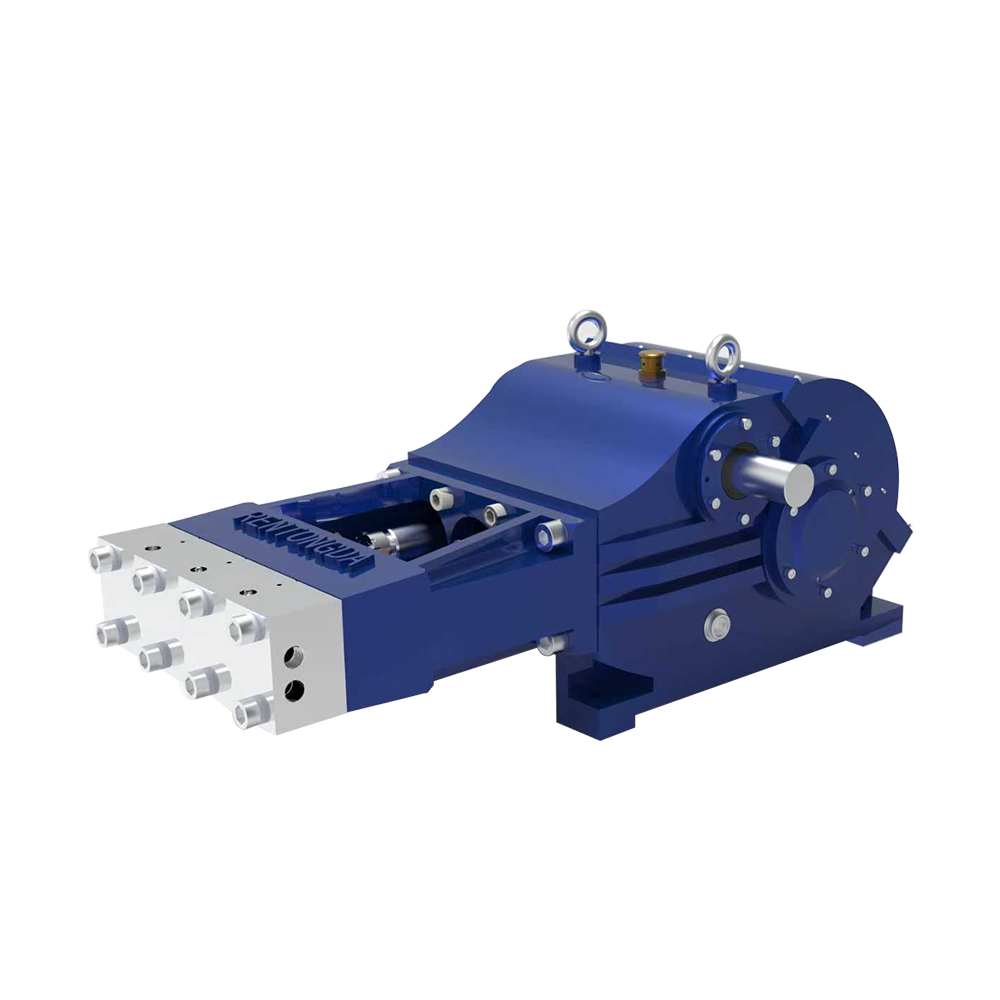
Plunger pumps solve these problems through superior mechanical design. They use a stationary high-pressure seal called packing. A smooth cylindrical plunger moves precisely through this stationary seal. This design creates higher pressures effortlessly. It handles harsh fluids far better than traditional piston models. The friction stays localized on highly durable surfaces. You get reliable pressure delivery regardless of fluid abrasiveness. We recommend them highly for non-negotiable pressure tasks.
Field operators use high-pressure water blasting daily. They remove tough paraffin and hardened scale from equipment. They clear heavy crude oil buildup from drilling rigs. Tanks and internal pipe surfaces require regular aggressive descaling. If left unchecked, these blockages halt production entirely. Consistent cleaning ensures optimal flow rates across the facility. It also prevents internal corrosion pockets from forming underneath the sludge.
Field teams rely heavily on an industrial water jet pump. It forces concentrated water streams through specialized narrow nozzles. This action strips away the most stubborn surface deposits. It operates efficiently even in remote well locations. You can configure it to handle cold water or heated fluid mixtures.
You must evaluate these units on several critical metrics before deployment.
Volume vs. Pressure: Operators must balance high GPM (Gallons Per Minute) against high PSI. High volume provides excellent flushing power for loose debris. High pressure cuts through hardened scale easily. An effective oilfield cleaning pump hits the perfect middle ground. You adjust these parameters based on the specific cleaning target.
Access & Integration: Mobility remains a major hurdle for field teams. Crews often mount an oil pipeline cleaning pump on heavy-duty steel skids. Skid-mounted configurations maneuver well across rugged terrain. They integrate quickly into temporary worksites. You can transport them via standard flatbed trucks easily.
You must verify structural integrity constantly on the rig. Teams check leak-resistance on casing and heavy tubing. They pressure-test wellheads and Blowout Preventers (BOP) rigorously. They perform these checks before and during active drilling operations. A single leak causes catastrophic environmental and safety failures. You cannot leave pressure containment to chance.
Companies deploy a dedicated wellhead pressure testing pump for this crucial task. It pushes fluids into closed systems to detect microscopic weaknesses. It acts as the ultimate diagnostic tool for rig safety. The unit must deliver absolute control over the pressure curve.
Testing environments demand strict adherence to performance metrics.
Linear Flow & Precision: You need exact fluid displacement at all times. Precision allows you to incrementally build pressure safely. You avoid over-pressurizing sensitive wellhead components. Positive displacement guarantees this predictable linear flow curve. It removes the guesswork from pressure ramping.
Zero Leak-By: Tight tolerance check valves hold static pressure firmly. They must maintain this pressure over a specified testing window. Regulatory compliance often demands 15 to 30 minutes of flawless holding time. Even minor internal leaks ruin the test results. Reliable valves ensure accurate safety verification. You must trust the hold perfectly.
Rig space costs money and limits movement. Horizontal pumps take up valuable deck real estate. They also suffer from gravity-induced wear over extended periods. The heavy plungers sag slightly as they cycle horizontally. This sagging creates uneven wear on plungers and packing rings. A vertical orientation solves this mechanical flaw entirely. The vertical alignment prevents uneven wear seamlessly. Gravity pulls parallel to the stroke rather than perpendicular. This greatly extends the life of internal components.
Engineers face a constant mechanical trade-off here. Two plungers (duplex) create massive and damaging fluid pulsation. Five plungers (quintuplex) reduce pulsation but add extreme mechanical complexity. Three plungers strike the perfect operational balance. A vertical triplex plunger pump provides remarkably smooth flow. It requires a smaller footprint than a quintuplex model. It minimizes vibrations effectively across the entire skid.
You must weigh the advantages against the operational realities.
Advantage: Volumetric efficiency typically exceeds 90% in optimal conditions. They easily handle pressures exceeding 10,000 PSI safely. They deliver unmatched reliability for extreme pressure tasks.
Disadvantage: You face a higher initial capital expenditure upfront. They remain highly sensitive to cavitation issues. You must properly size and prime feed lines constantly.
Configuration Type | Fluid Pulsation Level | Footprint Size | Mechanical Complexity |
|---|---|---|---|
Duplex (2 Plungers) | High (Requires heavy dampening) | Small | Low |
Triplex (3 Plungers) | Low (Smooth flow curve) | Compact (Vertical options) | Moderate |
Quintuplex (5 Plungers) | Very Low | Large | High |
Drilling fluids carry heavy abrasive particulate continuously. Sand and rock fragments accelerate packing wear dramatically. Micro-scoring ruins the high-pressure seal quickly. You must implement proper filtration systems upstream to catch debris. We also recommend dedicated lubrication systems for the plungers. Clean oil extends seal life dramatically. It flushes away microscopic grit before it causes permanent damage.
Suction and discharge valves endure extreme high-cycle fatigue. They slam shut thousands of times per hour under pressure. Fluid pH levels attack standard metals relentlessly. You must specify corrosion-resistant materials for these critical components. Stainless steel offers excellent baseline protection for moderate fluids. Tungsten carbide provides superior durability against extreme abrasives and acids. It prevents premature valve pitting effectively.
Positive displacement creates inherent fluid pulses naturally. You must install inlet and discharge pulsation dampeners always. These devices absorb hydraulic shocks effectively. They protect downstream pipework from structural fatigue and cracking. They also shield sensitive testing instruments from dangerous pressure spikes. Skipping dampeners leads directly to ruptured lines and failed tests. We view them as mandatory safety equipment.
Running the pump dry without proper priming procedures.
Ignoring daily inspections of the oil lubrication reservoir.
Using incorrectly sized suction hoses which starves the fluid end.
Bypassing upstream filtration to save temporary downtime.
You need absolute engineering transparency from vendors. Ensure the supplier provides comprehensive and certified testing documentation. Request MTRs (Material Test Reports) for all fluid-end components. Verify they align closely with API 674 manufacturing standards. Compliance proves their baseline manufacturing quality. It guarantees the metals match your operational specifications exactly.
Bare block pumps require extensive mechanical integration. Assess their ability to build rugged custom skids internally. They must integrate diesel engines or electric motors seamlessly. They need proven gearbox matching experience to ensure proper RPMs. Look for deep expertise in automated control panels and sensors. A fully integrated package saves weeks of field assembly time.
Assess the vendor's supply chain for critical wear parts. Downtime kills operational profitability faster than anything else. You cannot wait weeks for proprietary packing sets to arrive. Ceramic plungers must be readily available locally or regionally. A reliable oilfield pump supplier keeps emergency inventory stocked. Fast aftermarket support matters more than flashy initial sales brochures. We recommend auditing their spare parts warehouse before buying.
High pressure plunger pumps are non-negotiable assets for modern operations. They maintain rig safety during critical wellhead testing. They ensure operational efficiency for pipeline cleaning in the field. They deliver exactly what you demand when engineered correctly. You must balance upfront cost against pump metallurgy. Evaluate the expected packing life under your specific field conditions. Consider the physical footprint of the unit before purchase.
We encourage engineers and procurement teams to follow these exact steps before requesting a technical consultation or quote:
Conduct a thorough fluid analysis to determine abrasiveness and pH levels.
Specify your exact maximum flow (GPM) and pressure (PSI) requirements.
Measure your available footprint limits on the rig or transport trailer.
Identify your preferred power source (electric motor vs. diesel engine).
A: Piston pumps move the seal with the piston. They work better for lower pressure and high volume mud pumping. Plunger pumps move a smooth rod through a stationary seal. This design proves superior for extreme high-pressure testing and rigorous pipeline cleaning. It handles friction and wear much better.
A: You must ensure adequate Net Positive Suction Head (NPSH). Operators achieve this using a centrifugal charge pump. You also need proper inlet line sizing. Always perform regular inspections of suction filters. Blocked filters restrict flow and cause immediate cavitation damage to the fluid end.
A: Packing lifespan varies highly. It ranges from hundreds to thousands of hours. It depends entirely on fluid lubricity and particulate size. Operating pressure heavily influences degradation rates. Strict preventative maintenance routines and proper plunger lubrication will significantly extend the life of your packing seals.


