

close
Choose Your Site
Global
Social Media


Views: 0 Author: Site Editor Publish Time: 2026-09-15 Origin: Site


Procuring heavy industrial equipment involves incredibly high stakes. You face massive capital investments upfront. Operator safety constantly hangs in the balance on every job site. Daily productivity completely depends on making the correct purchasing choice. We frequently see buyers make two critical mistakes. Under-specifying the unit leads to highly inefficient surface preparation. You also risk rapid component failure during peak operations. Conversely, over-specifying the system simply wastes valuable capital. It creates excessive maintenance burdens later. We offer an objective, compliance-aware framework here. Procurement teams and operational managers truly need this practical guidance. You will learn how to evaluate manufacturers effectively. We will show you how to assess technical specifications accurately. You can then project long-term maintenance burdens confidently. This ensures your final investment aligns perfectly with daily field realities. This guarantees maximum uptime and optimal performance for your crew.
Pressure vs. Flow Matrix: Selecting the right machine requires balancing PSI (cutting power) and GPM (clearing volume) based on your specific application.
Component Integrity Dictates Uptime: The true cost of an industrial water blasting machine lies in the lifecycle of its consumables (seals, plungers, and valves).
Safety is Non-Negotiable: Automated fail-safes and compliance with regional UHP guidelines must be standard, not optional add-ons.
Vendor Evaluation: Post-sale support, parts availability, and training programs are as critical as the equipment’s technical capabilities.
Many buyers purchase equipment based solely on maximum pressure ratings. This mistake often leads to severe operational bottlenecks. Your new equipment must align perfectly with your primary workload. Buying unmatched equipment guarantees poor field performance. We recommend auditing your most frequent job types first.
You must balance pressure against flow carefully. High pressure combined with low flow creates highly concentrated energy. We find this ideal for precise cutting tasks. It also excels at localized coatings removal. The concentrated stream easily cuts hard materials.
Moderate-to-high pressure paired with high flow serves a completely different purpose. You need this specific configuration to operate a highly efficient surface preparation machine. Clearing massive amounts of debris requires water volume. The same principle applies when operating heavy-duty descaling equipment. Without adequate flow, scale simply breaks loose and remains stuck to the surface.
Different industrial jobs demand specific machine characteristics. You cannot treat all applications equally.
Rust Removal Operations: You must evaluate nozzle configurations strictly. Operating dedicated rust removal equipment requires aggressive rotary nozzles. You also need continuous duty cycles. Achieving white-metal finishes demands sustained power. These finishes must meet strict NACE or SSPC standards continuously.
Industrial Cleaning & Plant Maintenance: You must assess portability requirements carefully. Plant maintenance crews navigate incredibly tight spaces. You should measure footprint limits beforehand. Evaluate the maximum hose run capabilities. Long hose runs cause pressure drops. You must account for these drops during the procurement phase.
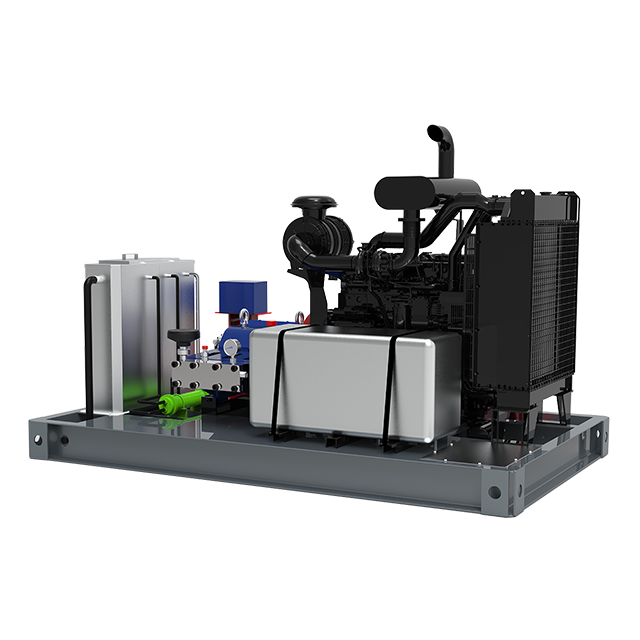
We must evaluate what sits under the hood. You want to ensure continuous operation. Harsh environments quickly destroy fragile components. Robust internal architecture prevents unexpected breakdowns.
You have several major pump choices available. Triplex and quintplex plunger pumps dominate industrial spaces. They offer distinct pros and cons compared to intensifier pumps. Plunger pumps typically handle continuous industrial use much better. They deliver smoother flow rates overall. Intensifiers excel at generating extreme, intermittent pressures. However, they often require more complex maintenance procedures.
Drive systems also dictate operational flexibility. Diesel drives offer immense portability for field work. They power remote job sites easily. Electric drives suit indoor, emissions-restricted environments perfectly. You must evaluate power availability on-site carefully. Ambient operating temperatures also dictate your optimal drive choice.
Table 1: Comparing Plunger Pumps vs. Intensifier Pumps
Pump Characteristic | Triplex/Quintplex Plunger Pumps | Intensifier Pumps |
|---|---|---|
Primary Application | Continuous high-volume industrial cleaning | Precision cutting and intermittent extreme pressure |
Flow Rate | High flow consistency | Lower flow volume |
Maintenance Profile | Predictable wear, accessible fluid ends | Complex seal replacement, specialized tools needed |
Energy Efficiency | Highly efficient mechanical direct drive | Lower efficiency due to hydraulic conversion |
Poor water quality easily destroys these precision systems. A standard high pressure water jet machine remains incredibly vulnerable to dirt. Particulates act like sandpaper inside the pump. You must implement strict filtration stages immediately. We recommend multiple 1-micron filters for maximum protection. You also need a dedicated booster pump. This critical component prevents cavitation. Cavitation causes catastrophic pump failure within minutes.
Buyers must shift their focus away from initial purchase prices. The long-term maintenance reality dictates your true operational success. Ignoring maintenance requirements guarantees frequent project delays.
High-wear items require constant financial attention. You must analyze the expected lifespan of UHP seals. Burst discs and fluid end components also fail regularly. We suggest questioning vendor claims aggressively. You should verify stated component lifespans using empirical field data. Do not rely on ideal laboratory conditions. Lab conditions never match gritty field realities.
Best practices dictate keeping spare wear parts on-site. We recommend tracking consumable lifecycles meticulously. This allows you to schedule preventative maintenance accurately. It prevents catastrophic failures during active shifts.
Machine design heavily impacts your downtime. Does the unit allow quick fluid-end packing changes? Can your crew perform these changes in the field? Some complex designs require a specialized shop environment. Field repairs save massive amounts of time. You must weigh the impact of downtime on your project schedules. Cartridge-style valves offer an excellent solution. They allow operators to swap components in fifteen minutes. Traditional designs might sideline a machine for four hours.
UHP equipment operates between 30,000 and 40,000+ PSI. These extreme pressures introduce severe operator risk. The water stream cuts through solid steel. It can inflict fatal injuries instantly. You must evaluate how machines mitigate human error.
Mechanical and electronic safeguards protect operators daily. You need independent primary and secondary relief valves. Proper rupture disc placement remains non-negotiable. These discs blow out safely if pressure spikes. Electronic dump valves provide another crucial layer. They instantly relieve pressure when an operator releases the trigger. Never purchase a unit lacking redundant safety systems.
Removing humans from blast zones increases safety exponentially. Can you integrate robotic crawlers easily? Does the system support automated lances for heat exchanger cleaning? Enclosed cleaning cabinets provide excellent operator isolation. Automation protects your crew from fatigue and injuries. It also delivers highly consistent surface profiles.
Compliance shields your company from immense legal liability. The equipment must meet strict industry guidelines. OSHA enforces basic safety protocols across job sites. The WaterJet Technology Association (WJTA) sets industry-specific standards globally. They mandate specific color-coding for high-pressure hoses. Ensure your machine meets or exceeds these regional safety directives.
You need a clear decision framework here. Sometimes a standard catalog unit works perfectly. Other times, specialized engineering becomes strictly necessary. You must identify your unique constraints early.
Standard units offer significant logistical advantages. You benefit from much faster lead times. Standardized spare parts remain readily available worldwide. A catalog unit provides proven reliability metrics. Thousands of field hours back up its performance claims. Standard units suit most general contracting needs perfectly.
Specific operational constraints force custom builds. You should consider a custom water blasting machine under these circumstances:
Footprint Constraints: Offshore oil rigs feature minimal deck space. Specialized vacuum truck chassis require unique frame designs. Engineers must alter the skid layout completely.
Extreme Environmental Conditions: Freezing environments demand Arctic weather packages. These packages include internal heaters and insulation. Refineries often require explosion-proof ATEX certifications. Standard units create dangerous sparks in these zones.
Factory Integration: Automated manufacturing requires seamless communication. You need custom PLC integration. Systems from Allen-Bradley or Siemens must interface directly with the pump controls.
You need actionable criteria to vet manufacturers thoroughly. Do this before requesting any official quotes. A poor vendor relationship creates endless operational headaches.
International shipping delays cripple operations quickly. Localized parts availability keeps your projects running. You must confirm the availability of OEM-certified field technicians locally. Can they reach your site within 24 hours? If a critical fluid end cracks, you cannot wait three weeks for overseas shipping.
Proper training prevents catastrophic accidents entirely. Does the vendor provide comprehensive operational training? Maintenance training must address the specific unit purchased. Generic manuals offer little practical help. Ensure the manufacturer offers hands-on sessions for your maintenance crew. We consider this a mandatory requirement.
Do not accept verbal promises regarding performance. Request real-world case studies detailing similar applications. You should demand thorough factory acceptance testing (FAT). During the FAT, verify vibration levels and pressure stability. Field demonstrations prove actual performance capabilities. Make the vendor prove their claims on your toughest surface.
The best ultra high pressure water blasting machine balances raw power perfectly. It ensures strict operator safety at all times. Component durability and vendor reliability guarantee your long-term success. We highly encourage buyers to conduct thorough site audits first. You must test your available water supply quality. You should define your primary use cases clearly. Distinguish carefully between heavy rust removal and light scale clearing. Finally, demand transparent maintenance lifecycle data from your short-listed vendors. This ensures you avoid costly operational surprises later.
A: High pressure generally falls below 30,000 PSI. It handles general industrial cleaning and moderate descaling. Ultra high pressure (UHP) exceeds 30,000 PSI. You use UHP for highly aggressive applications. These include cutting hard materials and complete coating removal. UHP requires specialized safety gear and advanced pumps.
A: Flow rates vary heavily by application. Precise cutting requires only a few gallons per minute. Massive surface preparation might consume over 20 GPM. You must calculate your site water availability beforehand. We also recommend planning for proper wastewater capture and recycling to maintain environmental compliance.
A: Consumables represent the largest hidden burden. You will frequently replace UHP seals, burst discs, and fluid end parts. Water filtration maintenance also adds up quickly. You must account for wastewater disposal fees. Specialized operator safety gear requires regular replacement to prevent catastrophic injuries.
A: Retrofitting UHP systems presents major engineering challenges. You cannot easily increase maximum PSI later. Pumps and drive units have strict structural limits. You must specify the correct drive units upfront. Securing adequate pump capacities initially prevents expensive frame replacements down the road.


