

close
Choose Your Site
Global
Social Media


Views: 0 Author: Site Editor Publish Time: 2026-09-19 Origin: Site


Industrial buyers often default to the highest PSI available. They mistakenly equate raw pressure with faster, better cleaning. This mindset creates a tough procurement challenge for facilities. Evaluating industrial high pressure washer performance requires a balanced formula. Pressure breaks the bond of dirt. Flow rate then flushes it away. Relying on pressure alone leaves debris behind. We see facilities waste countless labor hours on simple cleaning tasks. Optimizing the ratio between pressure and flow works best. It is the only verifiable way to reduce labor costs. This optimization also prevents surface damage. Ultimately, it maximizes your equipment return on investment. You must match equipment capabilities to your specific soils. This article breaks down the exact mechanics behind effective cleaning. You will learn how to calculate true cleaning units objectively. We also explore strict infrastructure limits you must consider before buying.
PSI (Pressure) strips; GPM (Flow Rate) cleans: High pressure without adequate flow results in slow, inefficient material removal.
Cleaning Units (CU) dictate real-world performance: Multiplying PSI by GPM yields a standard metric for comparing actual cleaning power across different models.
Application drives specification: Heavy mud requires high flow; grease and chemical bonds require high pressure (and often heat).
Infrastructure limits capacity: Purchasing a high-flow machine is a wasted investment if the facility's water supply cannot meet the pump’s minimum intake requirements.
Many buyers fall into a common industry trap. They buy equipment based solely on peak pressure specs. This narrow focus creates a false economy. High pressure numbers look impressive on a specification sheet. However, they rarely tell the whole story of real-world capability.
Using a low-flow and high-pressure unit drains your resources. The pressure easily dislodges dirt from the surface. Unfortunately, the low water volume cannot wash it away. Your operators must spend twice as long clearing the debris. This inefficiency drives up your hourly labor costs significantly. Imagine paying a cleaning crew twenty dollars an hour. If a low-flow machine doubles their washing time, your cleaning costs double instantly. You lose money every single shift. Fast cleaning cycles keep your maintenance budget under strict control. You achieve this speed entirely through higher flow rates.
Excessive PSI introduces severe risks to delicate commercial surfaces. Operators often blast HVAC coils using high pressure. This crushes the delicate aluminum fins instantly. Soft stone and aged brick also suffer under extreme force. High pressure strips the mortar right out of brick walls. These mistakes cause irreversible structural damage to your facility. Higher flow rates solve this problem entirely. They clean delicate surfaces safely at much lower pressures. You achieve excellent visual results without destroying the underlying asset.
To understand equipment limits, we must look at physics. The mechanics of washing rely on two distinct hydraulic forces.
Pressure acts as your primary scraper. We measure this mechanical force in PSI or Bar. Pressure determines the exact force applied to the surface. It breaks the stubborn bond between contaminants and substrates. Flow rate acts as your heavy-duty shovel. We measure this volume in GPM or LPM. Flow determines the sheer volume of water available. This water carries the dislodged contaminant away from the work zone. Optimizing your pressure washer flow rate directly correlates to operator speed. More water simply moves more dirt per minute.
Industry experts use an objective evaluation formula. They calculate Cleaning Units (CU) to measure true performance accurately. The formula is simple: PSI x GPM = CU. You use this framework to demonstrate actual cleaning power. It clearly proves why lower pressure sometimes wins on the job site. A 2,000 PSI machine pushing 4 GPM equals 8,000 CU. A 3,000 PSI machine pushing only 2 GPM equals 6,000 CU. The 8,000 CU machine often cleans much faster. Your water jet cleaning efficiency improves drastically by prioritizing water volume over brute force.
Cleaning Units Comparison Chart
Pressure (PSI) | Flow Rate (GPM) | Cleaning Units (CU) | Relative Speed |
|---|---|---|---|
3,000 | 2.0 | 6,000 | Slow |
2,500 | 3.0 | 7,500 | Moderate |
2,000 | 4.0 | 8,000 | Fast |
3,500 | 4.0 | 14,000 | Very Fast |
You cannot buy equipment in a vacuum. You must evaluate every high pressure cleaning system by its intended application. Different soils require entirely different mechanical approaches.
We use specific logic to match machines to jobs. Proper shortlisting ensures you never under-spec or over-spec your equipment.
Earthmoving, Agriculture, and Heavy Mud: These environments present unique challenges. You must move massive volumes of loose debris quickly. This requires high flow rates between 4 and 8 GPM. You only need moderate pressure around 1,500 to 2,000 PSI. Water volume matters much more than brute force here.
Concrete, Paint Stripping, and Greasy Machinery: These applications require a completely inverted approach. You must shear stubborn molecular bonds effectively. This requires high pressure between 3,000 and 5,000 PSI. You only need a moderate flow of 3 to 4 GPM. The high impact force does the heavy lifting.
Temperature plays a massive role in industrial cleaning. Introducing heat changes your performance calculations significantly. Hot water reduces the absolute need for extreme PSI. It excels at breaking down petrochemicals and heavy grease. Heat melts the bonds that cold water struggles to break. Using hot water also reduces your reliance on harsh detergents. This saves significant money on your chemical inventory. It also protects the surrounding environment from toxic runoff. You clean faster and sanitize deeply by adding heat.
Great specifications mean nothing if your facility cannot support them. Buyers frequently ignore their own infrastructure dependencies. This oversight leads to catastrophic equipment failures and safety hazards.
Water supply starvation remains the primary implementation risk. You might specify a powerful 6 GPM washer. However, your facility's municipal tap only supplies 4 GPM. The pump aggressively tries to pull water it cannot get. This creates an intense vacuum inside the manifold. The vacuum causes immediate pump cavitation. Bubbles form and collapse violently against the ceramic plungers. This cavitation causes catastrophic failure in minutes. Always use heavy-duty, reinforced inlet hoses. Weak residential garden hoses collapse under the vacuum pull. This collapsing also starves the industrial pump instantly.
Industrial environments punish cleaning equipment mercilessly. Sustained peak performance stresses internal wear parts constantly. You must verify the burst rating of every component. Check the durability of your high pressure hose first. Inspect the brass fittings and the high-pressure pump seals. These parts endure extreme friction and heat daily. Using commercial-grade components is absolutely critical for continuous industrial use. Cheap hoses will burst and cause severe workplace injuries. Do not cut corners on wear parts.
Heavier flow rates produce much greater lance kickback. The physical pushback exhausts operators over a long shift. High fatigue levels lead directly to workplace accidents. You must outline strict safety protocols for your staff. We strongly recommend investing in ergonomic trigger guns. These specialized guns reduce hand strain significantly. You also need proper operator safety training before deploying equipment. Teach operators how to brace against the kickback safely. Monitor their fatigue levels during extended washing cycles.
Finding the right vendor requires careful due diligence. Not every industrial pressure washer manufacturer builds reliable commercial equipment. You must look past the shiny marketing brochures.
Always demand complete transparency regarding performance numbers. You should reject vendors who only market peak or maximum PSI. Peak numbers represent a momentary burst of energy. You need accurate working or operating specifications instead. Make sure the manufacturer verifies these numbers at the nozzle. Friction loss occurs inside the hose and fittings. True working performance is always lower than naked pump ratings. Honest vendors provide these real-world numbers upfront.
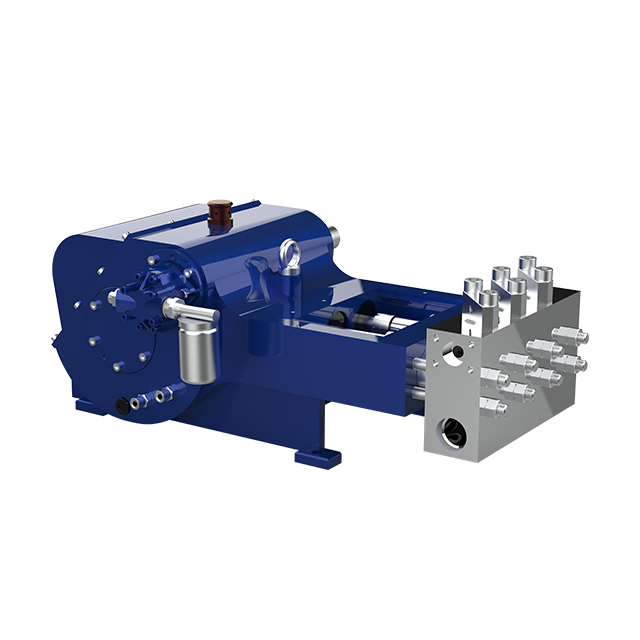
The internal pump architecture dictates the machine lifespan entirely. You must evaluate the specific pump type carefully. Axial pumps work fine for light, occasional residential use. However, they fail quickly under rigorous commercial duty cycles. You must insist on triplex plunger pumps for industrial applications. Triplex pumps feature solid ceramic plungers and heavy brass manifolds. They use an oil-bath lubrication system to run cooler. Triplex pumps are fully rebuildable in the field. You can replace individual valves and seals easily. Axial pumps are usually cheap, sealed units. When an axial pump breaks, you must throw it away. Triplex architecture is completely mandatory for daily commercial use.
An industrial pressure washer is a mission-critical piece of equipment. When it breaks down, your production often halts entirely. You must evaluate the manufacturer based on post-sale support. Check their service level agreements carefully before signing contracts. Ensure you have immediate access to replacement hoses and guns. You need local rebuild kits and readily available seals. A vast local service network minimizes your operational downtime. Do not buy machines requiring specialized parts shipped from overseas.
Maximizing industrial cleaning efficiency requires a smart, balanced approach. It is entirely about matching your PSI and GPM ratio. You must align these metrics to your specific soil type. You must also align them with your facility infrastructure. Do not let peak pressure numbers blind your procurement decisions.
Before requesting vendor quotes, take actionable next steps. Audit your on-site water supply thoroughly. Perform a simple bucket test to verify your available GPM. Next, calculate your current labor costs per cleaning task. Understanding your baseline costs helps justify the right equipment investment. Buy the flow you need to flush the dirt away efficiently.
A: Neither operates effectively in complete isolation. GPM determines your overall cleaning speed. PSI determines your ability to break stubborn dirt bonds. You must match the ratio to your specific application. Heavy mud requires high flow. Stripping paint requires high pressure.
A: You should perform a standard bucket test. Place a five-gallon bucket under your source tap. Turn the water on completely. Time exactly how long it takes to fill the bucket. Divide five by the seconds it took, then multiply by sixty. This calculates your available GPM.
A: Your overall flow rate always remains constant. The pump pushes the exact same volume of water. However, pressure drops significantly due to friction loss inside the hose. We strongly emphasize proper hose diameter sizing to minimize this pressure loss over long distances.


